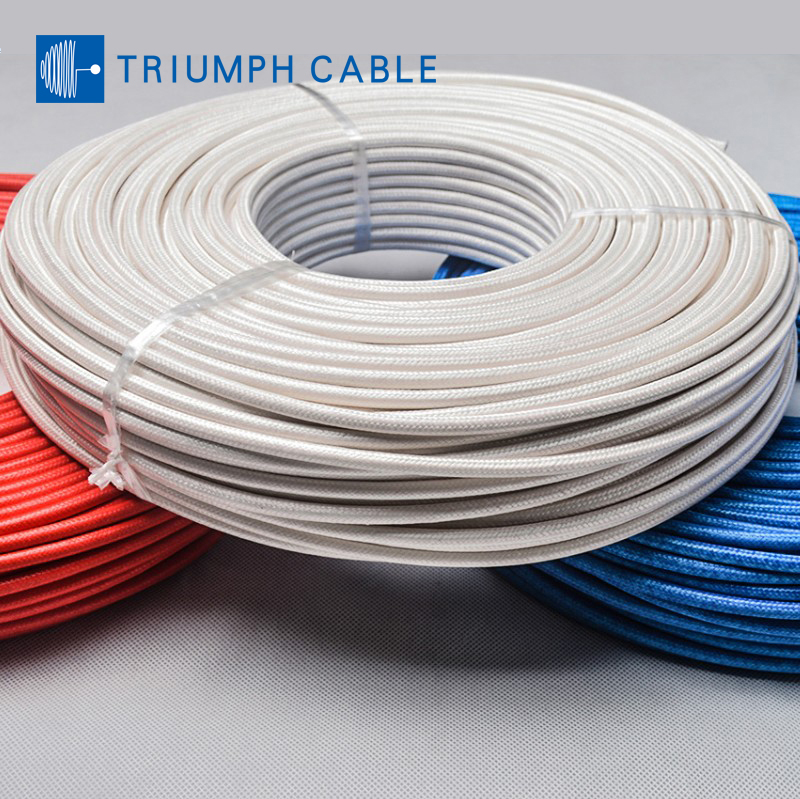
500 °C High‑Temperature Mica Silicone Braided Wire
Rated Temperature: Stable long-term operation at 500°C, with short-term peak tolerance up to 550°C, suitable for extreme thermal cycling environments.
Insulation Structure: Three-layer composite design — mica tape wrapping + silicone rubber insulation + glass fiber braided outer sheath — delivering superior electrical insulation and mechanical protection.
Conductor Material: Primarily nickel-plated copper stranded conductor, enhancing oxidation resistance and maintaining electrical stability under high temperatures.
Rated Voltage: Commonly 600V AC, compliant with international standards such as UL5128 and UL5335, ideal for industrial control and high-power heating systems.
Operating Temperature Range: -60°C to +500°C, combining low-temperature flexibility with high-temperature resilience for cold-hot alternating conditions.
Flame Retardancy: Halogen-free and flame-retardant; emits no toxic gases during combustion, compliant with RoHS and CE directives.
Core Advantage Summary:
At 500°C, this cable achieves a unique triad of high insulation, high flexibility, and high reliability through the synergistic combination of mica’s dielectric strength, silicone’s elastic sealing, and braided glass fiber’s tensile protection — offering a superior alternative to brittle glass fiber wires and prohibitively expensive ceramic fiber solutions.
International Certifications: Compliant with UL5128, UL5335, CE, RoHS; suitable for export to North America and Europe.
Domestic Compliance: Meets CCC mandatory certification requirements for industrial equipment in China.
Environmental Standards: Lead-free, halogen-free, and fully compliant with EU RoHS 2.0 and REACH regulations, ideal for green manufacturing and renewable energy applications.
Industrial Heating Systems: Electric furnaces, heat treatment ovens, dryers, injection molding machine heating elements
Energy & Power: Generator winding leads, transformer high-temp connections, inverter internal wiring
Aerospace: Rocket ignition systems, engine sensor wiring (mica’s natural radiation resistance)
Electric Vehicles: Battery thermal runaway protection systems, high-voltage busbar connections (replacing traditional ceramic fiber)
Appliances: Premium ovens, coffee machines, induction cooktops internal wiring
This cable delivers exceptional stability under continuous high-temperature operation, frequent thermal cycling, and mechanical vibration, making it a critical component in industrial automation and advanced manufacturing.
Visual representation of typical cross-sections and external appearances of 500°C mica silicone braided wires, illustrating the layered construction: mica wrap, silicone insulation, and glass fiber braid.
These user notes compile real-world selection criteria, installation best practices, and comparative performance data from industrial engineers and cable suppliers, providing practical guidance for field deployment.
Long-Term Thermal Aging: Although rated for 500°C, continuous operation beyond 10,000 hours may cause gradual silicone hardening, reducing flexibility — periodic inspection recommended.
Higher Cost: Material and manufacturing complexity result in a price point 3–5× higher than standard silicone cables, making it unsuitable for low-performance applications.
Lack of Global Standardization: Variations exist across manufacturers in braid density, mica content, and thickness — always request the Technical Data Sheet (TDS) and temperature rating curve before procurement.
Preferred Configuration: Nickel-plated copper conductor + mica tape wrap + silicone insulation + glass fiber braid
Cross-Sectional Area: Select between 1.5mm² to 16mm² based on current load; common sizes: 2.5mm², 4mm², 6mm²
Color Coding: Red, yellow, blue, green used for phase/return identification to enhance installation safety
Procurement Recommendation: Prioritize suppliers with verified UL/CE/RoHS certification and transparent technical documentation
This cable represents the industry benchmark for 500°C electrical interconnects, with growing demand driven by Industry 4.0 and sustainable manufacturing trends.